NEXT PETS
NEXT PETS
NEXT PETS
NEXT PETS
NEXT PETS
PETS
Showing posts with label inventor. Show all posts

Saturday, May 29, 2010

Rodrig Goliescu

Rodrig Goliescu (1882–1942) was a Romanian inventor, engineer, and Lieutenant, who built the Avioplan, the first airplane with a tubular fuselage. The model, with a length of 1.2 m was successfully tested in 1909, having a take off angle of 30 degrees. The originality of this aircraft was the shape of the fuselage, designed for minimum drag and acting as a tube fan, similar to the way the modern vertical take off aircraft and helicopters are designed.


This shape reduced drag and increased the efficiency of the propeller. Helped by the Minister of Education, Spiru Haret, who also helped Aurel Vlaicu, in 1909 he went to France to acquire an engine for his aircraft. In Paris he sent a survey "Laws of air dynamics" to the French Academy, study that was published in "La France automobile et aérienne" magazine, on 15 May 1909. Goliescu patented his invention in France (patent no. 402329). In the same year he learned to fly and he built an updated version of his aircraft, this time in full size. The aircraft had a half cylinder fuselage, but still the air from the propeller flowed through as in the first model. He flies with his aircraft for the first time, in November 1909, on Juvisy airfield, near Paris, and he reaches an altitude of about 50 m. It was for the first time to fly an aircraft with a tubed propeller. Between 1932 and 1936 he flight tested his Aviocoleopter, the first aircraft to have a toroidal wing.


After his flights, only in 1932, the Italian engineer Luigi Stipa will build an aircraft with a "barrel fuselage" under the name of Stipa-Caproni but the concept will reach its dedication after the Second World War, being successfully implemented in helicopters like SA-365 Dauphin, RAH-66 Comanche or the new X-35 fighter.

Sources: Wikipedia, Early Aviators.

Sunday, May 2, 2010

A Gold Invention

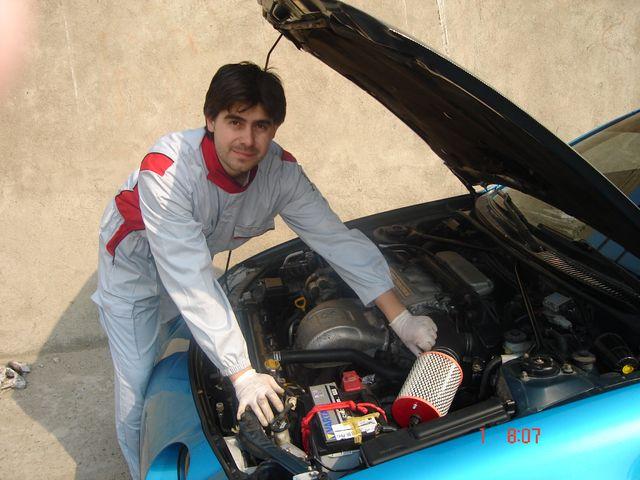
The Romanian Corneliu Birtok-Băneasa was awarded the Gold Medal at the current edition of International Exhibition of Inventions in Geneva, the young inventor from Deva presenting a Dynamic Device for Air Transfer that provide a higher efficiency of internal combustion engines. The invention can be used in the automotive industry and provide better engine cooling while reducing fuel consumption and emissions.


This year's graduate of Faculty of Engineering in Hunedoara, Corneliu was able to experience his invention on 20 different cars with different engine types. The cars were monitored for three years, while being conducted measurements in the Engine Laboratory of the Faculty of Engineering Hunedoara. "The device creates an easy supercharging effect which increases proportionally with speed of the vehicle and increase volumetric efficiency of internal combustion engine. The combustion of the fuel mixture is complete, the pollutant emissions and fuel consumption are lower", said the device inventor awarded in Geneva, cited by Agerpres.


His invention was awarded a Gold Medal at the Inventika International Exhibition in 2009, the Special Prize of the National Association of Inventors from Poland at the same event, and the Silver Medal of Eureka International Salon, Brussels 2009. The young inventor was noted also for another interesting invention: The "Super-vacuuming inverted filter", a device for cars to help reduce fuel consumption by up to 20%. With this invention Corneliu Birtok-Băneasa won gold, silver and bronze medals at various exhibitions of inventions.

Photos: Mesagerul Hunedorean, Impact News.

Friday, April 30, 2010

Best Woman Inventor in 2010

The Romanian Raluca-Ioana van Staden won this year the Golden Trophy of the World Intellectual Property for the Best Woman Inventor at the International Exhibition of Inventions in Geneva.


She invented a sensor that determines the existence of cancer in humans at the molecular level. Astonishing is that the sensor detects cancer in less than six minutes and the estimated cost would be less than one euro. Raluca-Ioana van Staden said that lack of funding has allowed the approach of only four types of cancer, because bio-markers are very expensive and all the tests to be made require a fairly large quantity of bio-markers. The device produced on large-scale would be very easy to use, as easy as a glucometer. "We've already done experiments on various types of cancer, as ovarian, breast, gastrointestinal and prostate cancer, as well with general markers of cancer. We make a determination before the disease is triggered in the body", she said in an interview. The device can be reused, there is no danger of contamination from one person to another, and last more than six months.

Raluca-Ioana van Staden (b. Ştefan) was born on July 16, 1969, in the city of Câmpulung, Argeş County. She obtained the baccalaureate in his hometown, then she followed the college. She has a doctorate in chemistry and a masterate in music composition. Raluca-Ioana is married with the scientist Jacobus Frederick van Staden, both working in the sole laboratory for analytical technology of processes in Romania, PATLAB, located in the Institute of Electro-Chemistry and Condensed Matter in Timişoara.

Photo: HotNews.

Sunday, April 25, 2010

Dumitru Văsescu

Dumitru Văsescu (1859 - 1909) was a Romanian engineer, professor and inventor.

Born in Iaşi in 1859, Dumitru Văsescu followed school and high school courses in his hometown. Animated by the desire to study engineering, he went to Paris, where he studied at the "École Centrale". In Paris young Văsescu installed a small workshop on Michelet Street, where he tried to build a machine capable of traveling on land or by rail, by its own means. After great efforts, managed to achieve in 1880 a steam car, which became after the tests one of the curiosities of Paris.

Steam car built by Dumitru Văsescu was composed of a multi-tubular boiler heated with coal, with connecting pipes, pressure valves and pressure gauges so disposed, that they can be handled easily. Very characteristic for this car were the rear wheels made of metal alloy with steel spokes and solid rubber tires. Front wheels were smaller and were made of metal, with tires. Dumitru Văsescu's car was fitted with two independent brake systems. Water tank was located under the driver's seat and steering wheel was on the right side of the car.

After graduating in Paris, Dumitru Văsescu returned in Romania in 1906, bringing with him his steam car, which circulated in Bucharest. The car was exhibited at the School of Bridges and Roads, where D. Văsescu teaches as professor. Dumitru Văsescu died on October 29, 1909, in Bucharest.

Monday, April 12, 2010

Tache Brumărescu

Dumitru (Tache) Brumărescu (1872, Vălenii de Munte - 1925 or 1937, Bucharest), designed and built the first aircraft vertically taking off in the world which flew on May 27, 1911.


During his lifetime, Tache Brumărescu had around 150 inventions, and participated in Romania's General Exhibitions in 1904 and 1906. One of those inventions was an unusual airplane, named helicopter-airplane, actually the world's first airplane with vertical takeoff, patented in 1909 (Patent no. 02218). The airplane was a mono-motor biplane, which had three propellers: one tractive, one propulsive, and a horizontal one for sustentation. His airplane model was exhibited at the Paris Air Show in 1910, near the Henri Coandă's jet powered aircraft.


A year later he managed to buy an Gnome-Rhone 50 HP engine and learned to fly an aircraft. The first and only flight made by Columba (the name of his airplane) took place on 27 May 1911 at Bucharest, on the Cotroceni field. The aircraft rose to a height of 6 m and flew a distance of approximately 80 meters. During the flight he noticed the airplane was loosing its balance and decided to land, but the sudden maneuver resulted in a crash. The propeller broke, the engine was blocked, and he was injured at one leg. The accident marked the end of his aviation experiments.


Other notable inventions of Brumărescu were: a rescue system for submarines (pattented in France in 1911), the automatically coupling system for railway wagons, a skid-car, and the reed cutter.

Wednesday, March 31, 2010

Dumitru Daponte and the 3D cinema

Dumitru Daponte (1894-1956) was a Romanian engineer, who invented in 1924 the 3D cinema.

After World War I began the boom of film industry. It was the silent film era, black and white, interrupted every 10 minutes to change the film coil. The dialogues were designed separately, on a black background and some film scenes were interrupted to provide the necessary explanation for the action understanding. However, the theaters were full and it was obvious that the new industry had a golden future.

One of the problems that Dumitru Daponte tried to solve is related to playback images in relief (the classic projection has only width and height, not depth, making the screen to be viewed as a sequence of shots). Techniques used in this way were different: the use of glasses with colored lenses, the projection of images on a curved screen etc.

Before Daponte, another Romanian had made a similar attempt: N. Iliescu Brînceni developed a kind of binoculars, which each spectator had to hold to eyes to see on a screen two distinct sets of images superposed to obtain the sensation of relief.

Dumitru Daponte began to work on his invention in 1916, doing research and experimentation in Italy and England, countries where the film enjoyed a great interest. He then made a device for obtaining a stereoscopic effect, based on the idea that the relief conditions must be created since the time of registration of the film. Daponte built a camera with two objectives (the ones by then had one), at approximately 6 cm distance from each other, trying to get the relief effect by projecting simultaneously each pair of captured images. The engineer based his invention by the fact that man sees with two eyes and the perception of relief is due to this double simultaneous reception of the image. His apparatus also contained a device allowing the adjustment of the distance between the two objectives. The two films thus obtained were then entered into a special recording device, such as the two images to be implemented on a single film. His invention was patented in France (Patent no. 592963) and England (Patent no. 222173).

Daponte's invention, introduced in 1924, enjoyed great interest and represented a step forward in addressing this crucial issue for the future of film industry.

Friday, March 12, 2010

Anastase Dragomir

Anastase Dragomir (1896-1966) was a distinguished Romanian inventor, most famous for his patent registered together with Tănase Dobrescu, an early version of the modern ejection seat.

Anastase Dragomir was born on February 6, 1896, in Brăila, being the sixth child of the family. He was interested, as many of the young people of that period, of aviation issues. He went to France, where he worked on several aircraft factories. There he perfected his own system to save the pilots and passengers in case of accidents. On November 3, 1928, he recorded in France the patent application "Nouveau système de montage des parachutes dans les appareils de locomotion aérienne" and obtained patent no. 678,566 in April 2, 1930. This invention was "a new system of parachuting from the apparatus for air locomotion, each passenger having his own parachute that allows, in critical moments, the detaching of the whole ensemble from the plane, so the parachute along with the passenger installed in the seat go through a opening in the floor" and the patent require that this set of cell-parachute to have more controls, operated by the pilot.

Since there was not a favorable financial time for aviation, the idea of this system rescue was for a long time regarded with suspicion by officials and companies, due to significantly more expensive planes built. After several interventions, Anastase Dragomir managed to obtain necessary financing and began construction of "catapulted cabin". He experienced the invention in August 28, 1929, at Orly airport near Paris. For this purpose was modified a Farman airplane in which was installed the catapultable cockpit, after the indications of the inventor. The plane was piloted by Lucien Bossoutrot, owner of record of a flight without stopover. The experience was a success, confirming the usefulness of this invention. After the demonstration, French newspapers have emphasized the world priority of the invention.

After the experiment, Anastase Dragomir returned home, where, with the help of captain Constantin Nicolau, engineer of the Romanian aviation technical services, repeated the demonstration at the Băneasa Airport in Bucharest, in October 26, 1929. This time he used an AVIA plane, and the newspapers reported in detail about this ingenious and practical means of rescue. Based on the results obtained, he developed and refined the initial solution. In 1950 he obtained a new patent, Romanian, no. 40658/1950, for the "parachuted cell". In 1959 he recorded a new application, for a transport aircraft with cabins equipped with ejection, for rescuing the passengers (Romanian patent no. 41,424 from 1960). Anastase Dragomir died in 1966 in Bucharest.